
Cultural day
Retiro and Prado: a calm first-visit day
Morning in the Retiro, afternoon at the Prado, paced to enjoy both without museum fatigue
Updated: June 2026
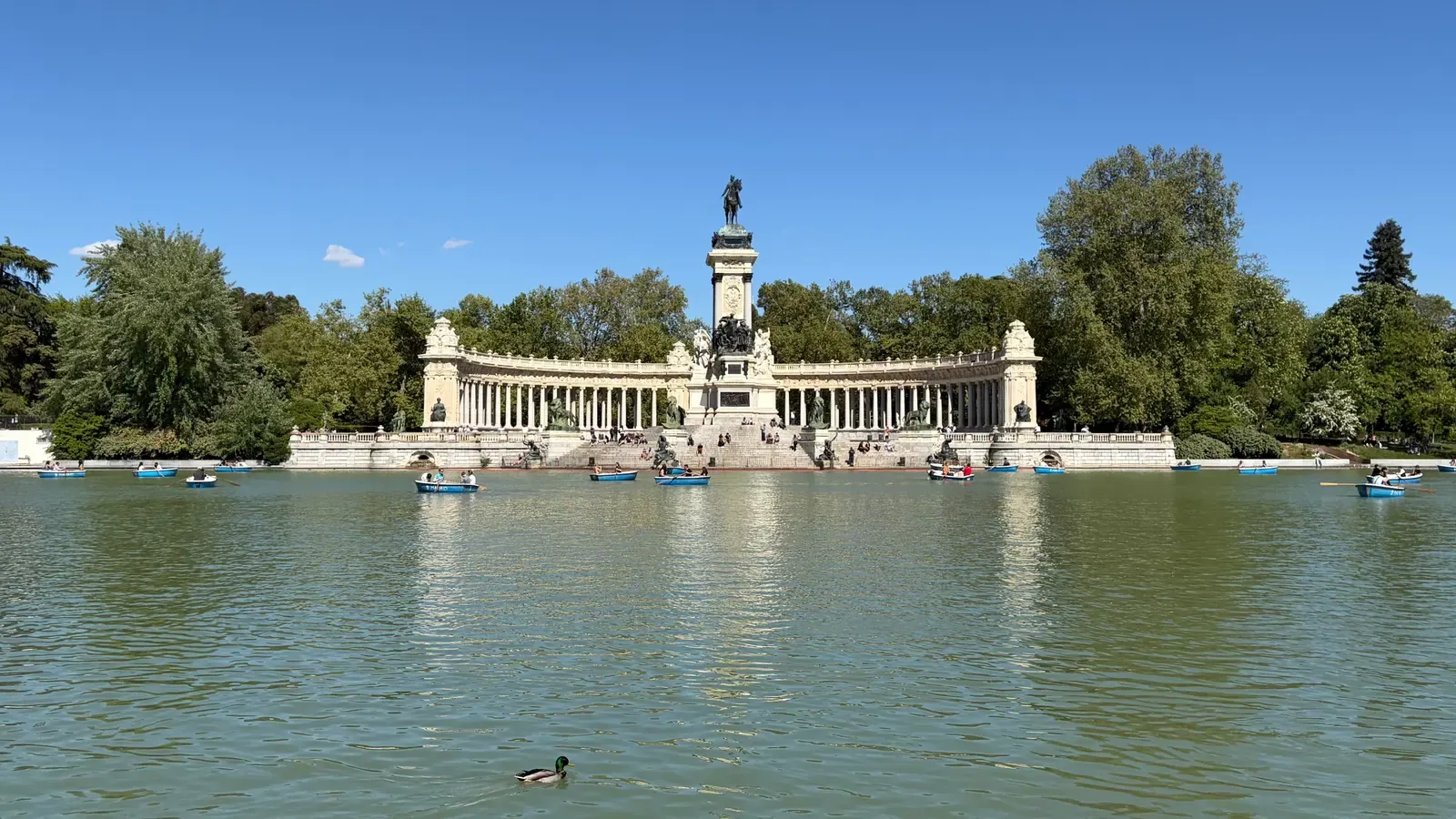
This plan pairs Parque del Retiro and Museo del Prado in the order that works best if you want calm: the Retiro first, while your legs are still fresh, and the Prado in the early afternoon. It isn’t trying to cover the whole park or the whole museum — it’s trying to give you one clear, recognizable day. If you only have energy for one half, the other still stands on its own.
Quick facts
- Duration: full day, about 7–8 hours with lunch and a Prado visit
- Best start time: 9:00–10:00 a.m. at Puerta de la Independencia (next to Puerta de Alcalá)
- Start / end point: Puerta de la Independencia → Museo del Prado
- Pace: relaxed, on foot, with stops
- Cost: €15 for standard Prado admission
- Booking: book the Prado online; choose an afternoon slot
Adjust to your pace
If you want to shorten the morning in the Retiro
Stick to the three stops that hold the route together: Estanque Grande, the Palacio de Cristal area, and El Parterre. The Fuente del Ángel Caído adds character, but it’s the easiest stop to cut if you want to reach the Prado with more energy.
If you’re visiting in July or August
Start around 8:00 a.m. and do the Retiro before the heat builds. Aim for a longer lunch in the shade around 12:30, then enter the Prado in the early afternoon. The route still works, but keep the park section tighter.
If you reach the Prado with less energy than planned
Focus on the core works and skip the supporting ones. It’s better to leave with a few paintings clearly in mind than a dozen blurred together.
Map of the route
Route: Puerta de la Independencia → Estanque Grande → Palacio de Cristal area → Fuente del Ángel Caído → El Parterre → Museo del Prado
The route, step by step
1. Puerta de la Independencia: entering the Retiro
The route starts at Puerta de la Independencia, right next to Puerta de Alcalá. This isn’t a stop to linger over. It’s the cleanest way into the park and the most direct line toward the Estanque Grande without adding detours.
Puerta de Alcalá may look like the natural entrance to the park, but it’s a monument in the roundabout, not a park gate. Puerta de la Independencia is the gate you want, a short walk away. If you arrive by metro, cross toward the park first, then enter.
Worth knowing: don’t spend much time here. The interesting Retiro starts a few minutes inside, and this route works better if you save your energy for the walk.
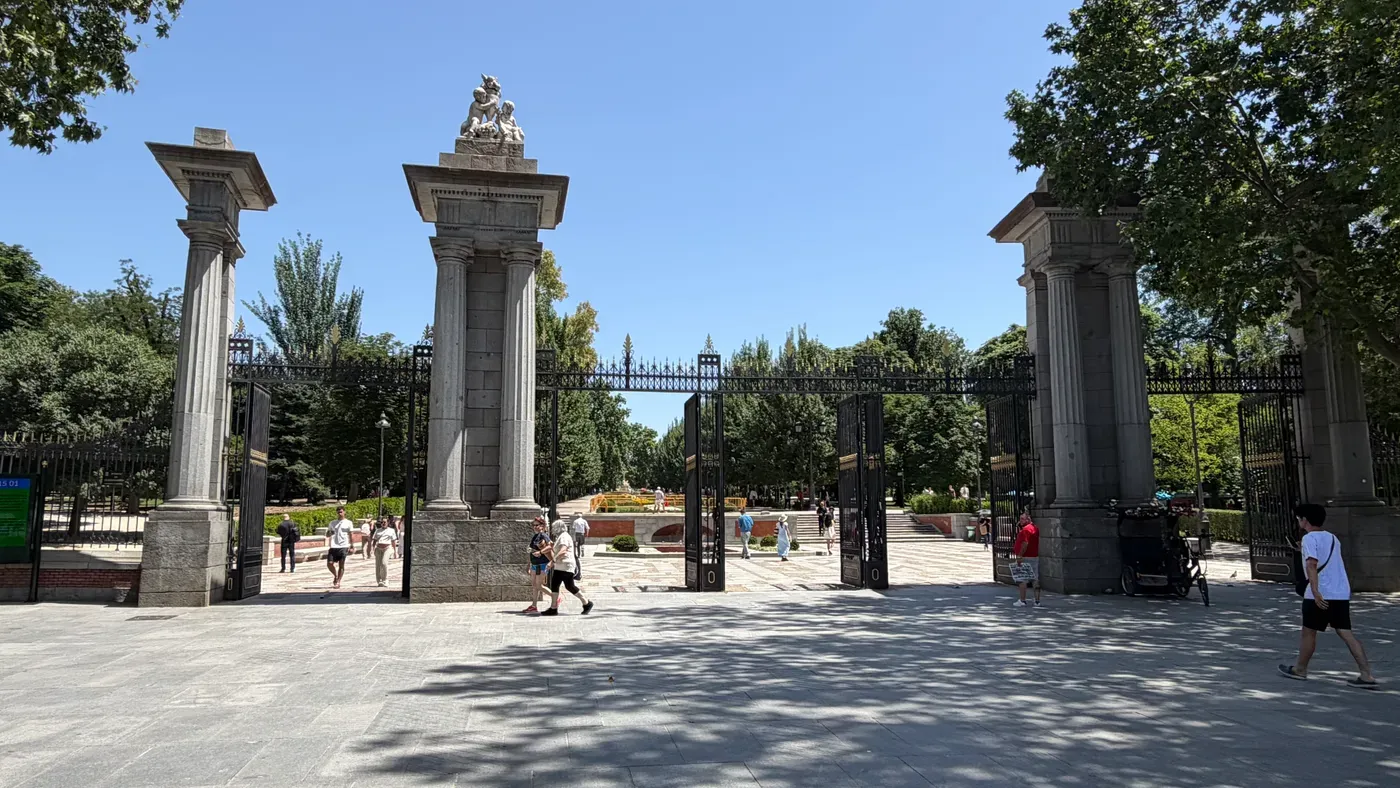
Puerta de la Independencia, the gate that opens the route.
2. Estanque Grande and the Monumento a Alfonso XII
The Estanque Grande is the Retiro at its most recognizable, and the first point where the park fully comes into focus. This is the image you came for, and it works.
What’s worth your time is walking the edge of the water toward the Monumento a Alfonso XII. From across the pond, the view opens up; up close, the steps, the colonnade, the lions and the equestrian statue have a scale you miss from the far side. The pond itself dates from the 17th century and was used by the royal court for mock naval battles.
Worth knowing: the rowboats are a Retiro classic, but treat them as an optional extra. Rowboat rental costs €6 weekdays, €8 weekends and holidays — per boat, up to 4 people, 45 minutes. Early on a weekday the queue is short; if the dock looks busy, keep walking.
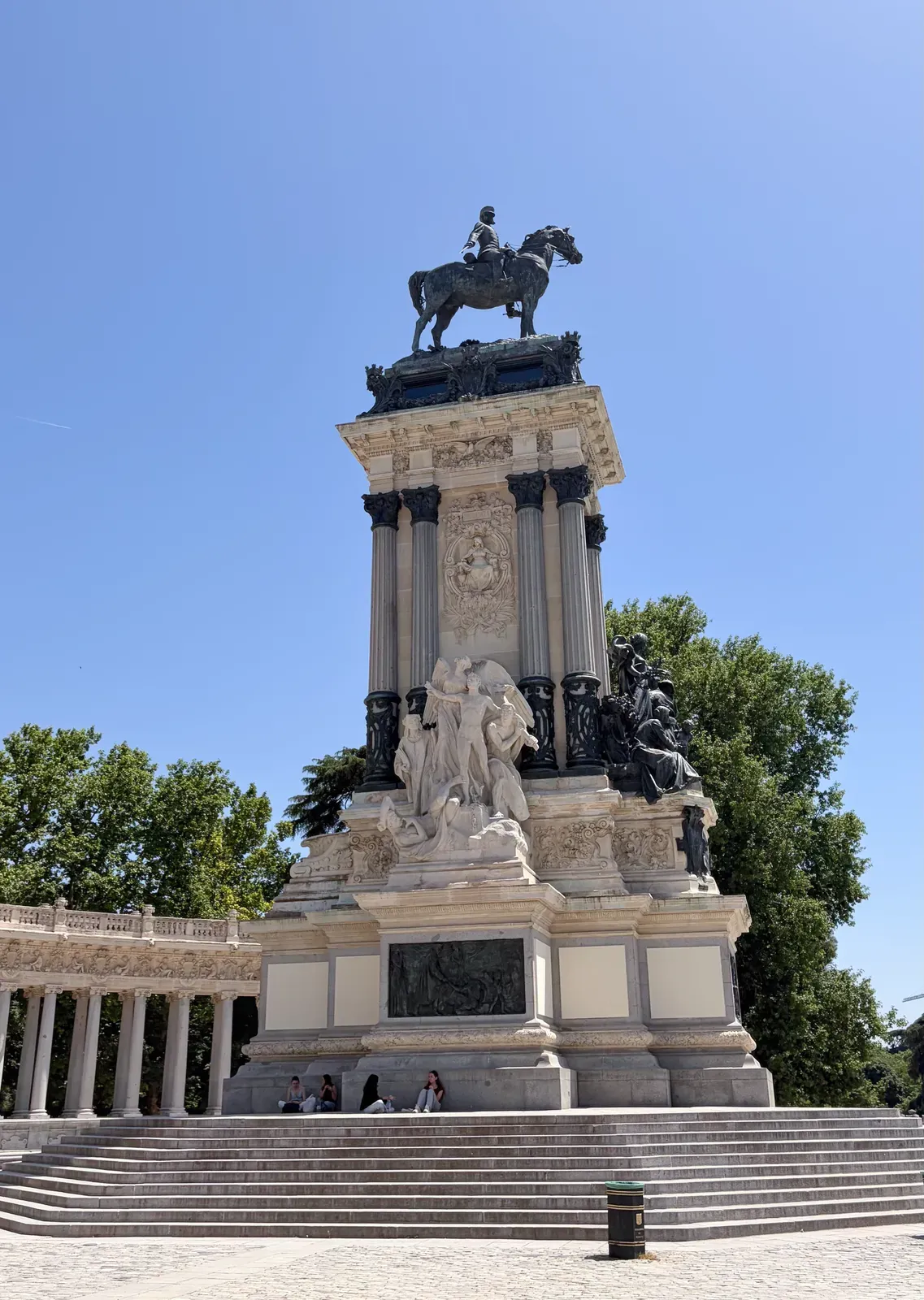
The Monumento a Alfonso XII up close from the western shore.
3. Palacio de Cristal: a stop for the surroundings
The Palacio de Cristal is still one of the most recognizable landmarks in the Retiro, but for now you have to come with adjusted expectations. The building is closed and partly covered. If you came for the clean glass-and-iron postcard, this isn’t that visit.
Even so, I wouldn’t cut this stop from the route. The detour still earns its place — the pond, the trees and the shift in atmosphere from the Estanque Grande are worth it. This corner of the Retiro feels more enclosed, quieter, less monumental.
The pavilion was built in 1887 for the Philippines Exposition, and its greenhouse origin still shows in its outline, even with the building covered. You’re not coming to see it from the inside today — you’re coming to understand why this corner of the park still matters, building or no building.
Worth knowing: don’t come expecting to enter the Palacio de Cristal or see the building uncovered. Restoration works are ongoing, with reopening expected in 2027.
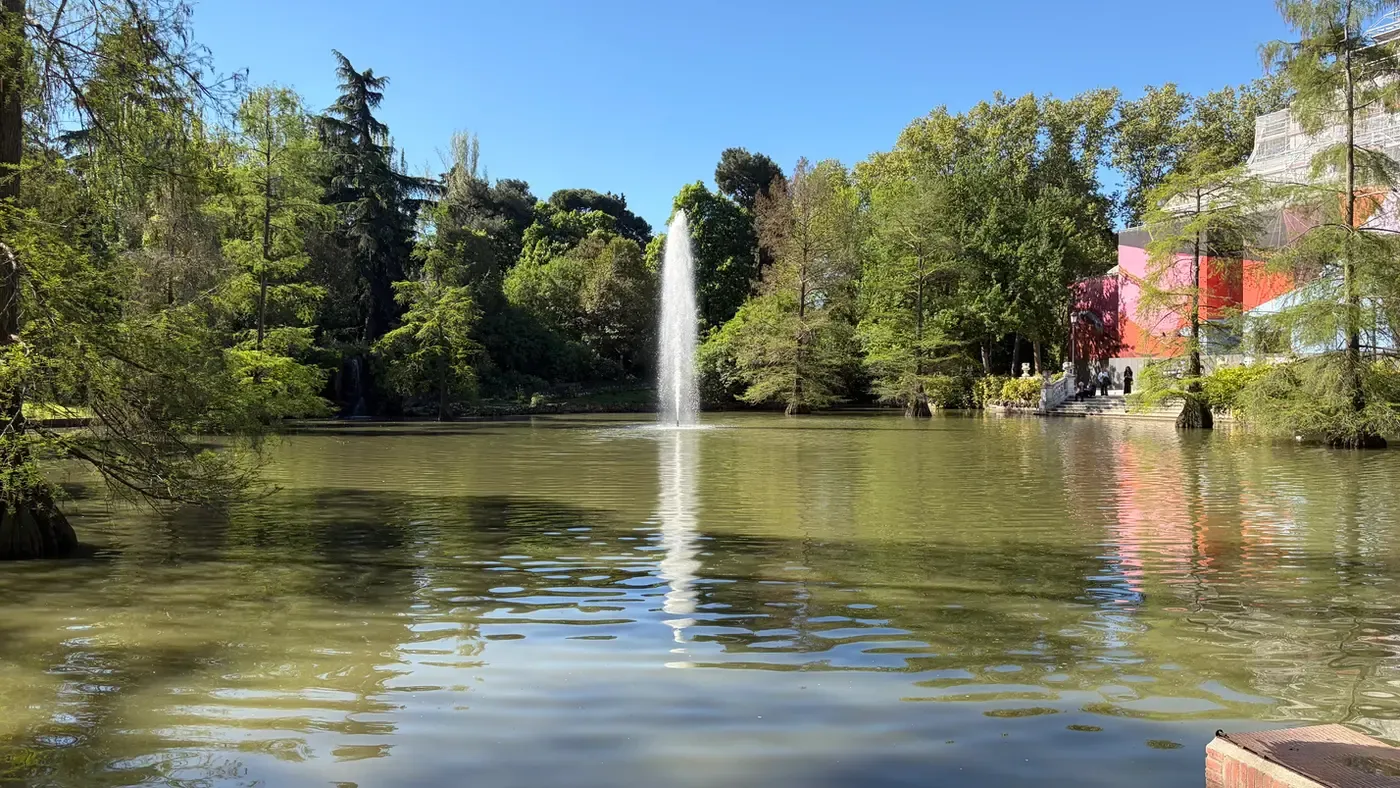
The pond at the Palacio de Cristal, with the building under restoration on the right.
4. Fuente del Ángel Caído
The Fuente del Ángel Caído gives the route a sharper change of tone after the calmer corners of the Retiro. Ricardo Bellver’s sculpture depicts Lucifer falling, which makes it an unusual public monument in the middle of the park.
What’s worth your time is seeing it up close and taking in the strangeness of the subject without inflating it. The fountain is often said to sit at 666 meters above sea level — a coincidence turned into urban legend more than anything else.
Worth knowing: from here, the route turns west toward El Parterre. Don’t loop back toward the Palacio de Cristal — this is the point where the walk starts heading out of the Retiro.
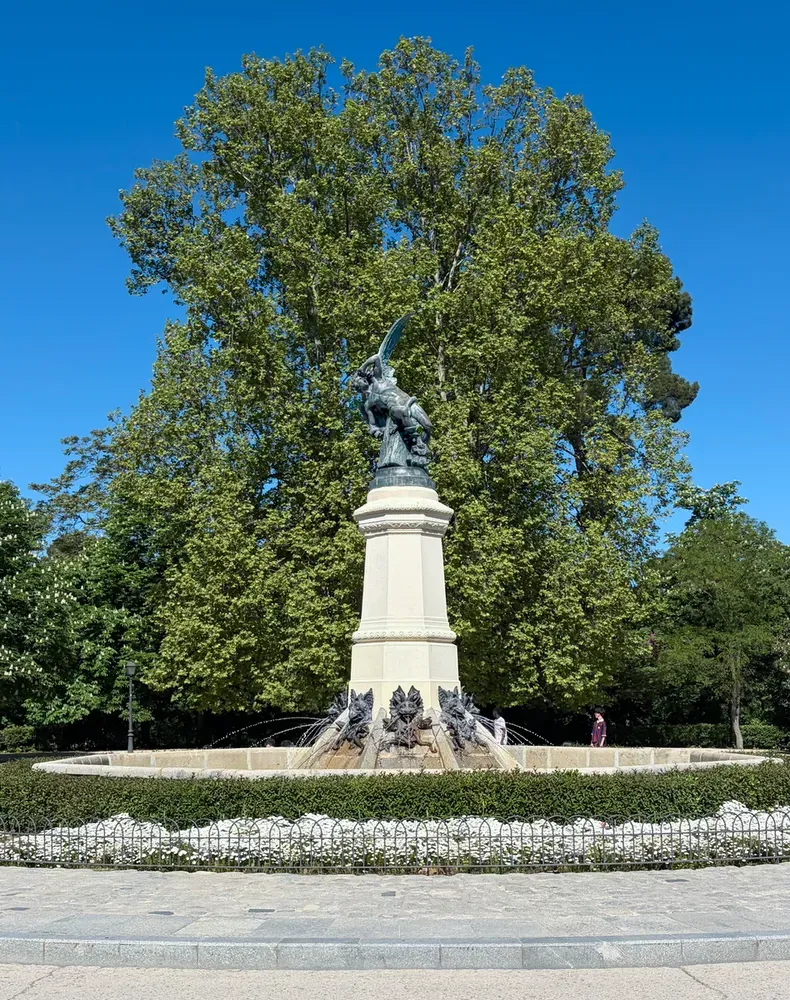
The Fuente del Ángel Caído, with Bellver's sculpture of Lucifer.
5. El Parterre: a quiet exit from the Retiro
El Parterre is a good way to close the morning before heading to the Prado. After the more open stretches of the park, the geometry of this French-style garden shifts the rhythm of the walk: more order, more shade, a calmer pace toward the city.
What stands out here is the contrast with the rest of the Retiro and, above all, the ahuehuete (Montezuma cypress) — often dated to around 1633 and considered one of the oldest trees in Madrid.
Worth knowing: the natural exit is Puerta de Felipe IV, which leaves you steps from the Museo del Prado. If you haven’t eaten yet, eat before going in — Madrid’s lunch window roughly lines up with this route, around 1:30–3:00 p.m., before your afternoon Prado slot.
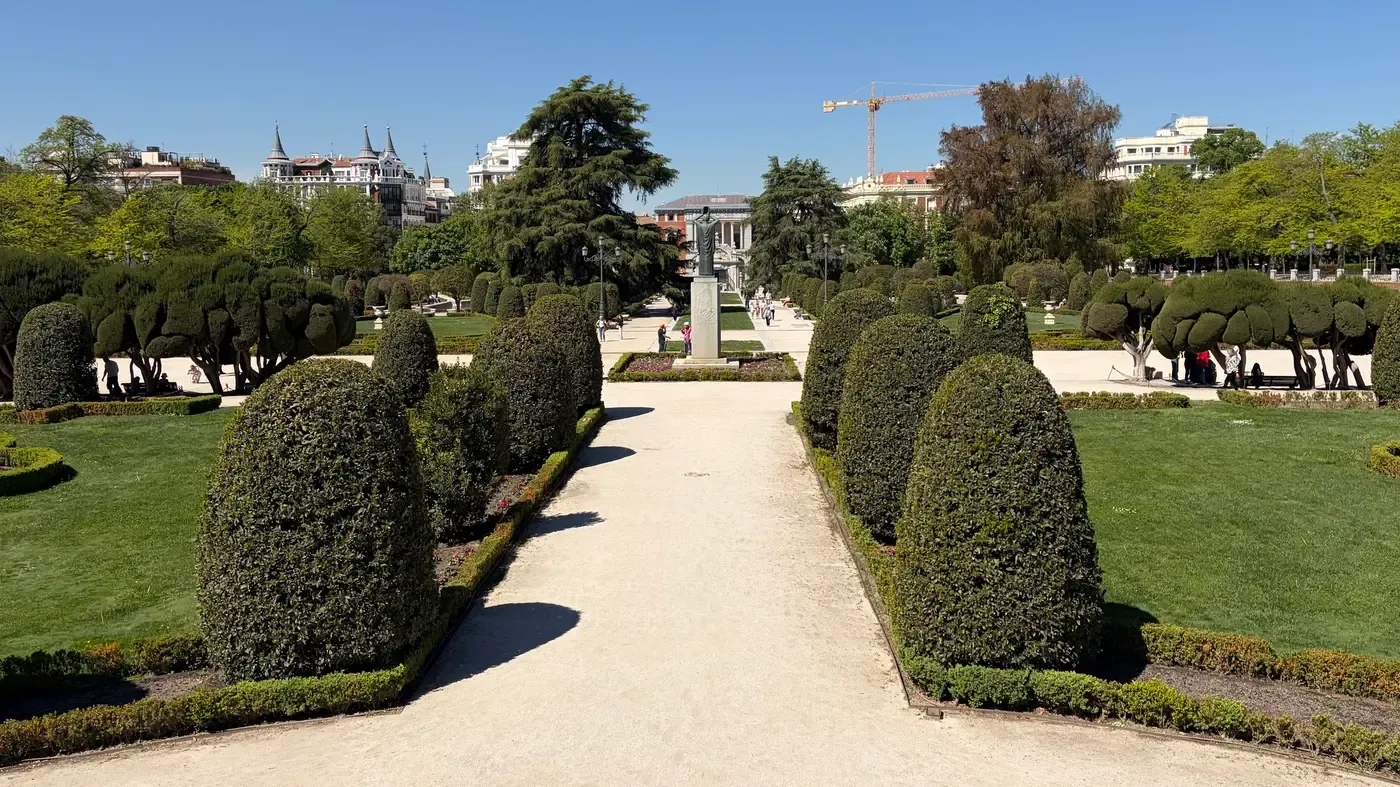
El Parterre, with the ahuehuete on the right standing out against the hedges.
6. Museo del Prado: a selective first visit
After a morning in the Retiro, the Museo del Prado works best as a focused selection, not as an attempt to cover the museum. You’re here to leave with a few works that stay with you, which is a better outcome for a first visit than a half-remembered checklist.
The plan is simple: four works to sit with, three more to take in along the way, in an order that works well when entering through Puerta de los Jerónimos. Expect to move between floors, but don’t turn this into a room-by-room mission.
1. The Garden of Earthly Delights (Bosch). Start here — and stay longer than your first instinct tells you. At first, read the triptych from left to right: Eden, the crowded central world, then hell. After that, slow down. The painting starts paying you back in the details — dozens of small scenes, half-readable, none of them quite like anything else in the museum. No other work here rewards slow looking as much as this one.
2. The Descent from the Cross (Van der Weyden). A quiet shock: a scene held at its emotional peak, with grief carved into every figure.
3. The 3rd of May 1808 in Madrid, or “The Executions” (Goya). This is where the Prado connects directly to Madrid outside the museum. Look at it once and you might read a historical scene; look again, and it’s fear, violence and a single light aimed at the man about to die. Goya doesn’t paint the firing squad as individual soldiers — he paints it as a wall. Of all the works on this route, this is the one most tied to the city you’ve just walked through.
4. Saturn Devouring His Son (Goya). After The Executions, the change of register is brutal — and that’s why both Goyas matter on this route. Don’t search for an explanation; the painting doesn’t offer one, and it doesn’t need one. Goya painted it on the wall of his own house, late in life, not for a museum wall. That’s why it works: it feels like the most private moment in the museum, and the most difficult to look away from. Of all the works here, this is the one that follows you out.
5. The Three Graces (Rubens). After the two Goyas, Rubens gives the route the change of tone it needs: light, flesh and movement.
6. The Nobleman with his Hand on his Chest (El Greco). A small painting that sticks: the hand, the gaze and nothing else competing for your attention.
7. Las Meninas (Velázquez). End here, and give it the time the rest of the visit was leading toward. Look at the whole scene first: the infanta, the dwarves, the dog, Velázquez himself with his brush. Then notice the mirror at the back — and where you’re standing. The king and queen reflected in that mirror are positioned just outside the painted scene, close to the viewer’s position. That’s what makes the painting different from everything else on this route: it doesn’t just ask you to look; it quietly pulls you into the frame.
Worth knowing: skip the free-admission window in the last two hours of the day; the queue can eat the time you’d save, and rushing through the Prado defeats the point of this route. No photography in the galleries, not even without flash; the signs and staff are firm. Take a break at the café around the halfway mark, and the official audio guide is enough for this visit.
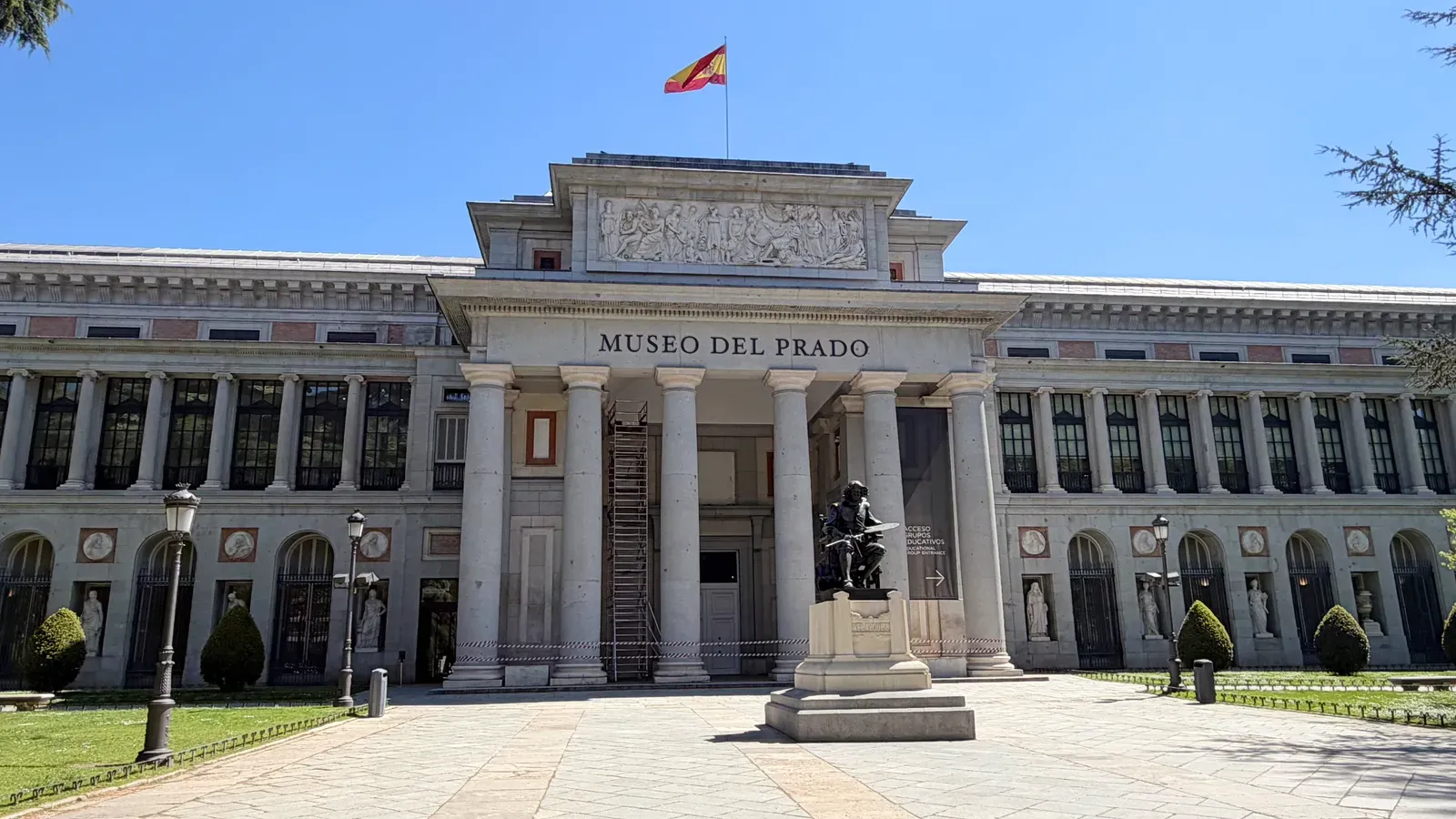
The main façade of the Museo del Prado, with the statue of Velázquez.
My verdict
I’d recommend this route if it’s your first time in Madrid and you want to combine the Retiro and the Prado without feeling like you’re ticking boxes. It works especially well if you want a classic, recognizable day rather than a thorough one.
I wouldn’t pick it if your priority is seeing the Prado in depth, or if you’d rather explore the Retiro at greater length. In either case, you’re better off separating them into two days.
What makes this route work is the balance: a quiet morning in the Retiro, then an afternoon at the Prado with a selection broad enough to enjoy without exhausting you.
Before you go
- Entry: From the Retiro, enter the Prado through Puerta de los Jerónimos. The museum has a free cloakroom at all entrances, but capacity is limited; if you’re carrying a backpack or anything bulky, plan to leave it before entering the galleries.
- Footwear: The route covers a long stretch of the Retiro on foot, then several hours inside the museum. By late afternoon, your legs will know it.
- Sunday and holiday hours: The Prado closes at 19:00 instead of 20:00 on Sundays and public holidays. Book earlier than on a weekday — entering at 16:00 gives you three hours, 17:00 only two.
Continue your day
After a day like this, I wouldn’t add another full route. But if you’ve rested a bit and still want to see Madrid in the evening, use just part of How to spend your first evening in Madrid — a short walk, a quiet dinner or one last stop before heading back.