
Walking route
How to spend your first afternoon in Madrid
Coffee with a view, a visit to the Palacio de Liria, and sunset at the Templo de Debod
Updated: June 2026
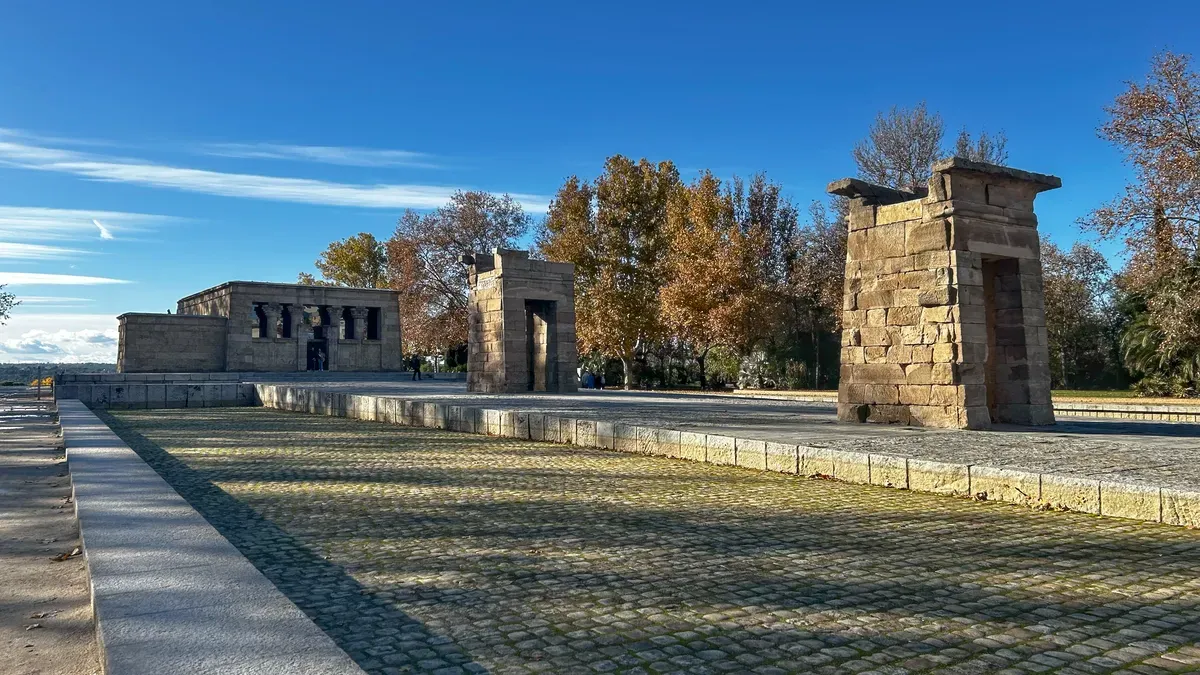
This afternoon moves west across Madrid, from Plaza del Callao to the Templo de Debod, getting quieter as it goes. One coffee stop with a view, one interior visit, one open-air finish at sunset. If you skip the Palacio de Liria or prefer to stay outside, the plan still holds.
Quick facts
- Duration: 3–4 hours full route; 2–3 if you skip the palace
- Best start time: 2–3 hours before sunset
- Start / end: Plaza del Callao / Templo de Debod
- Cultural highlight: Palacio de Liria — audio-guided visit in English, around 1 hour
- Pace: easy, all on foot
- Cost: coffee plus €15 — afternoon slots from 16:00 are reduced (general admission €20)
- Booking: walk-up tickets available at the box office, but book online to be safe
- Open: mornings 10:00–12:45 and afternoons 16:00–18:00 (last entry); Mondays mornings only
Adjust to your pace
If you’d rather skip the interior
Walk the route from the outside. Callao, Gran Vía, Plaza de España, then west to the Templo de Debod. The Palacio de Liria reads well from the street; you don’t need to go in for the afternoon to make sense.
If the Palacio de Liria is the part you care about
Book a slot that leaves room to reach the Templo de Debod before sunset. The palace runs on timed entry, so it sets the clock for the rest of the afternoon.
If sunset is early
Avoid a late-afternoon slot at the Palacio de Liria. Either visit in the morning before starting the route, or skip the palace and keep the afternoon open-air.
Map of the route
Route: Plaza del Callao → Gran Vía → Plaza de España → Palacio de Liria → Templo de Debod
The route, step by step
1. Plaza del Callao: coffee with a view
Start at Plaza del Callao. From here you get a clear view west along Gran Vía, with the Schweppes sign above the square. For a higher angle before walking, head to the Gourmet Experience on the top floor of El Corte Inglés. There’s a café with tables and bar seating facing the avenue, and a glass viewpoint where you can stop to look or take a photo without ordering anything.
This is the “coffee with a view” of the afternoon. Worth a real pause — not a quick photo stop, but the actual starting point of the route, with time to sit and look at Gran Vía before you walk it.
Worth knowing: if the café tables are full, the glass viewpoint still works for a few minutes of orientation. Plaza del Callao itself gives you the same direction down Gran Vía; the coffee is the bonus, not the goal.
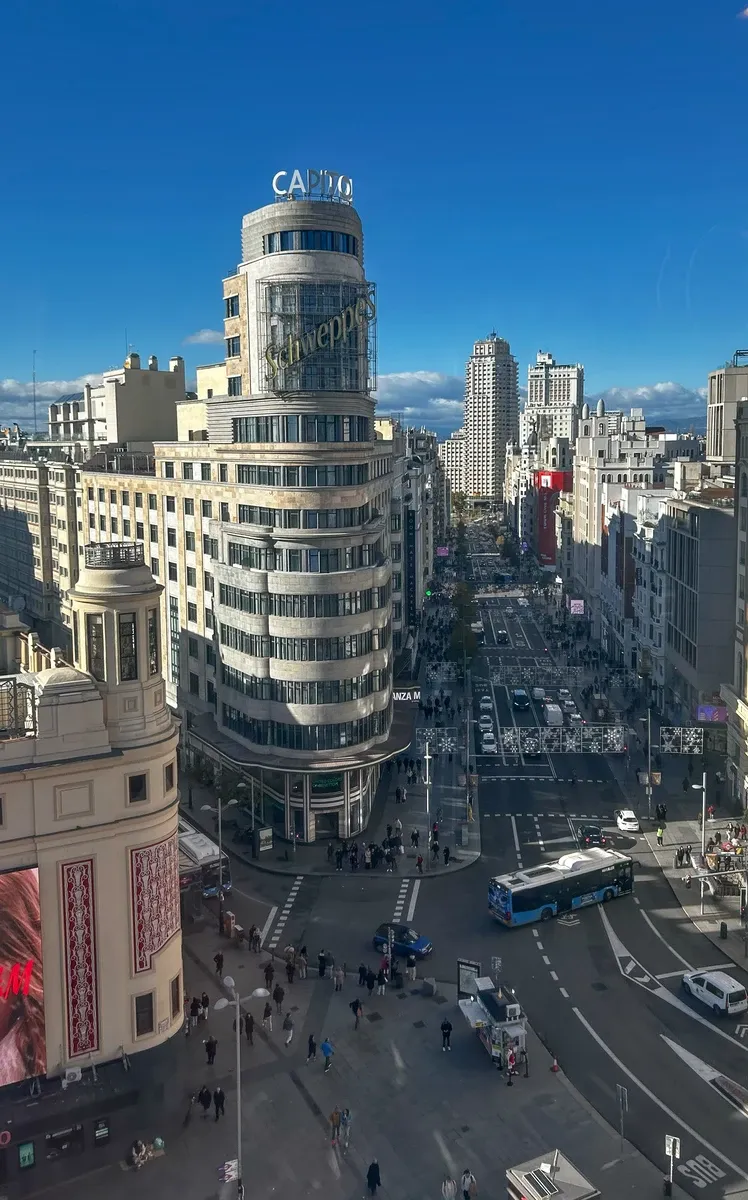
Plaza del Callao and the Edificio Capitol, the starting point of the route.
2. Gran Vía to Plaza de España
Walk west along Gran Vía toward Plaza de España. The avenue slopes gently downhill, so this section is easier than it first looks. Most of the façades date from the early 20th century, with the Edificio Capitol as the clearest reference: the curved corner building topped by the Schweppes sign. The theaters here are working venues, not heritage façades — Gran Vía is Madrid’s musical and theater axis, which keeps the avenue in everyday use.
At Plaza de España, the space opens up. The Monumento a Cervantes gives you an easy focal point, with Don Quijote and Sancho Panza in front. Behind it, the Edificio España and the Torre de Madrid frame the square.
Worth knowing: Gran Vía isn’t built for stopping — too narrow, too busy. Keep moving and save the pause for Plaza de España, where there’s actual room to sit.
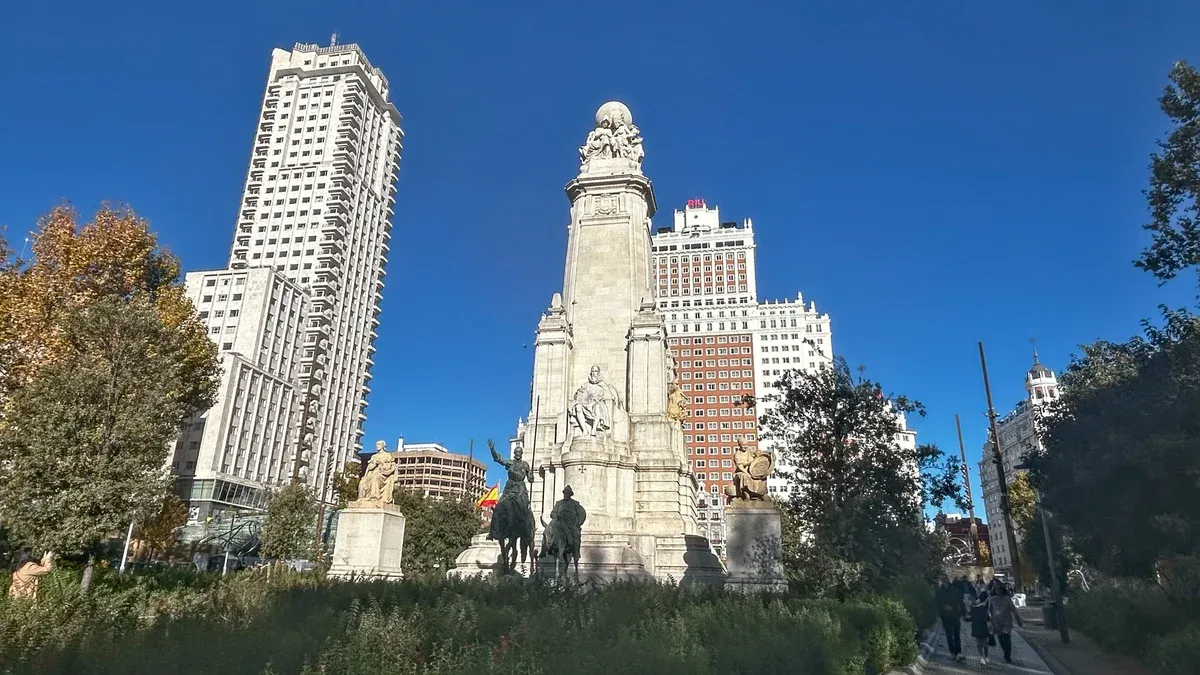
The Monumento a Cervantes with the Edificio España and the Torre de Madrid behind.
3. Palacio de Liria: the interior visit
A few minutes from Plaza de España, the Palacio de Liria is the historic residence of the Casa de Alba. Built between 1767 and 1785, it’s the route’s main cultural visit. The visit is self-paced with an English audio guide — no need to prepare beforehand; the audio places each room and the private art collection in context as you go.
From the street, the palace is easy to underestimate. The exterior is restrained, and there’s no broad plaza to take it in from. The reason to come is inside.
Worth knowing: entry is timed and your ticket is valid only for the booked slot. Walk-up tickets exist, but booking online is safer — especially if you want a specific time. On Mondays, visits are mornings only.
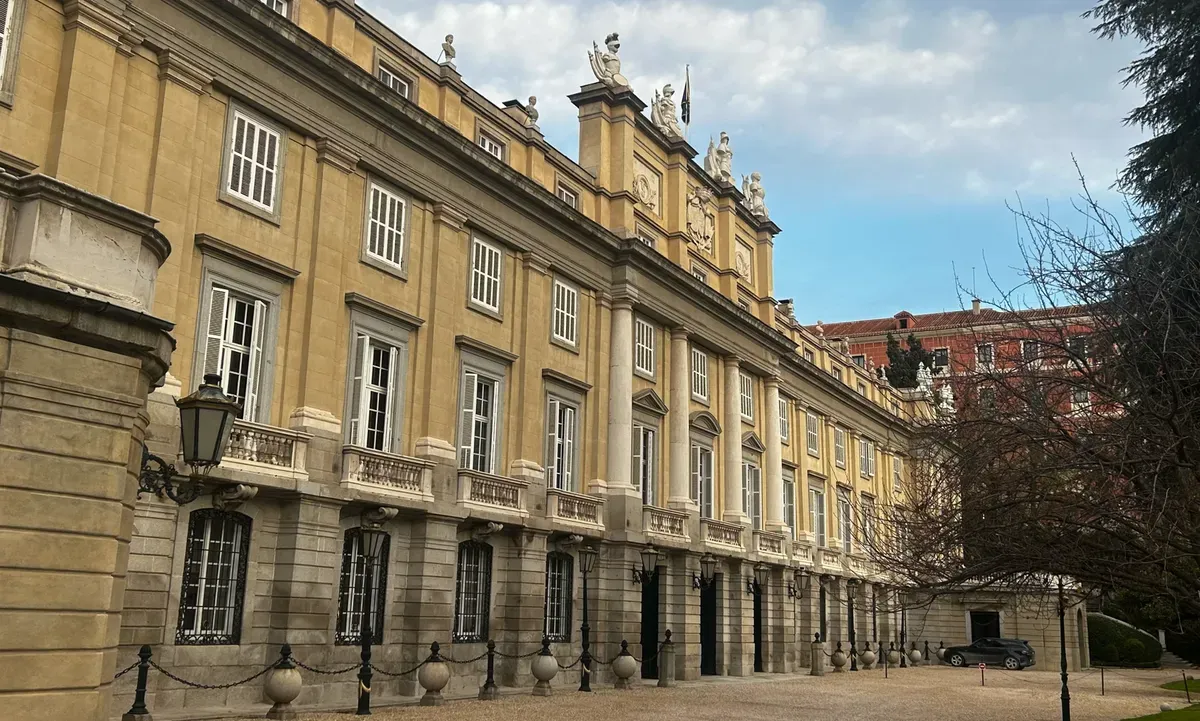
Façade of the Palacio de Liria, historic residence of the Casa de Alba.
4. Templo de Debod: the sunset finish
From Palacio de Liria, the route opens up and quiets down as you approach the Templo de Debod. The temple was originally built in Nubia around the 2nd century BC. Egypt donated it to Spain in 1968, after it was dismantled as part of the international effort to save Nubian monuments threatened by the Aswan High Dam. It was reassembled in Madrid a few years later. It’s the only standing Egyptian temple in Spain.
What makes this stop work isn’t only the temple — it’s the setting: the surrounding park, the open view west, and Casa de Campo in the distance. If you need to shorten the afternoon, cut something earlier, not this final stop.
Worth knowing: sunset draws a crowd. If the area around the temple is packed, move to the lawn behind it — the sunset is just as visible from there.
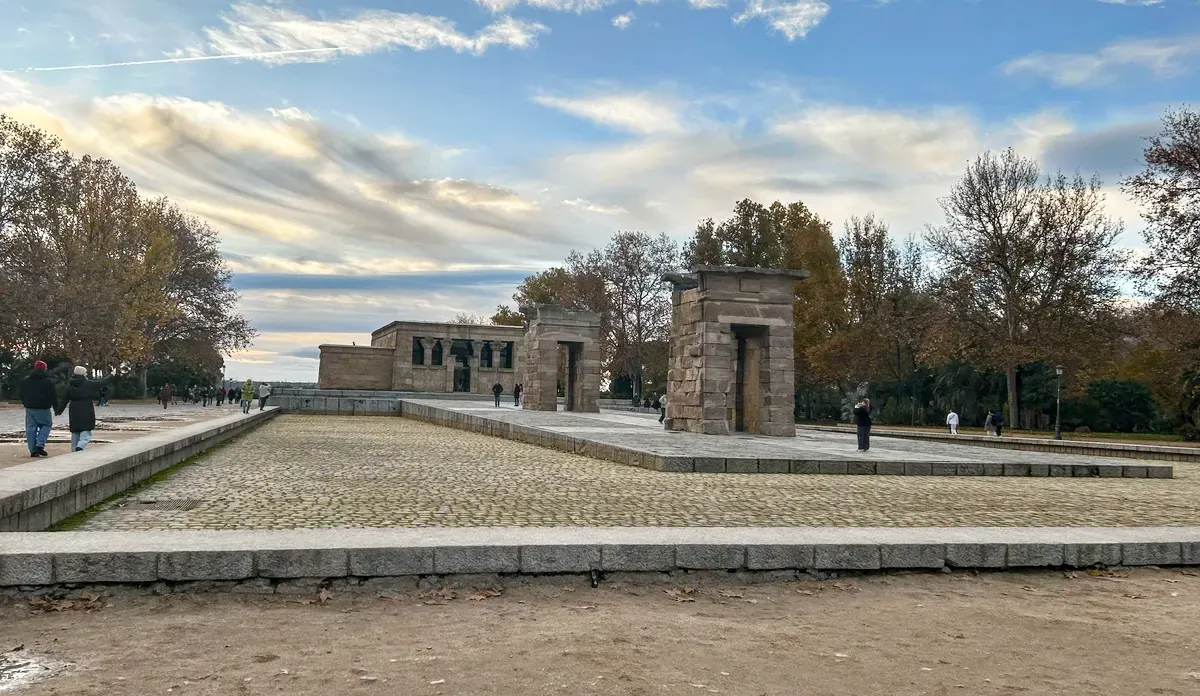
The Templo de Debod, the only standing Egyptian temple in Spain.
My verdict
I’d recommend this route if you want an afternoon that combines a city walk, one cultural visit, and an open-air finish with good light. I wouldn’t if sunset doesn’t matter to you, or if you’d rather stay in one compact area.
What makes it work is the timing. This isn’t a route to do at any hour — it’s built backwards from sunset, with the visit to Palacio de Liria as the fixed point in the middle. Those two anchors keep the afternoon in order.
Before you go
- Palacio de Liria: tickets are timed. Book online if you want the palace to anchor the afternoon. On Mondays, visits are mornings only.
- Sunset timing: check the day’s sunset time and aim to arrive at the Templo de Debod well before — at least 30–45 minutes ahead. The area is worth walking around: open views, the park around the temple, and street musicians often playing as the light starts to drop, especially in good weather.
- Templo de Debod exterior: the park and viewpoints around the temple are free and open all day. This route doesn’t depend on entering the monument.
- Weather: check the forecast. Steady rain weakens the route because its best section is outdoors — if you can, save the afternoon for a drier day.
Continue your day
If the afternoon left you wanting more and you’d like to see the center after dark, the natural continuation is How to spend your first evening in Madrid.
Planning a full first day in Madrid? Start with How to spend your first morning in Madrid, then follow this route in the afternoon.